

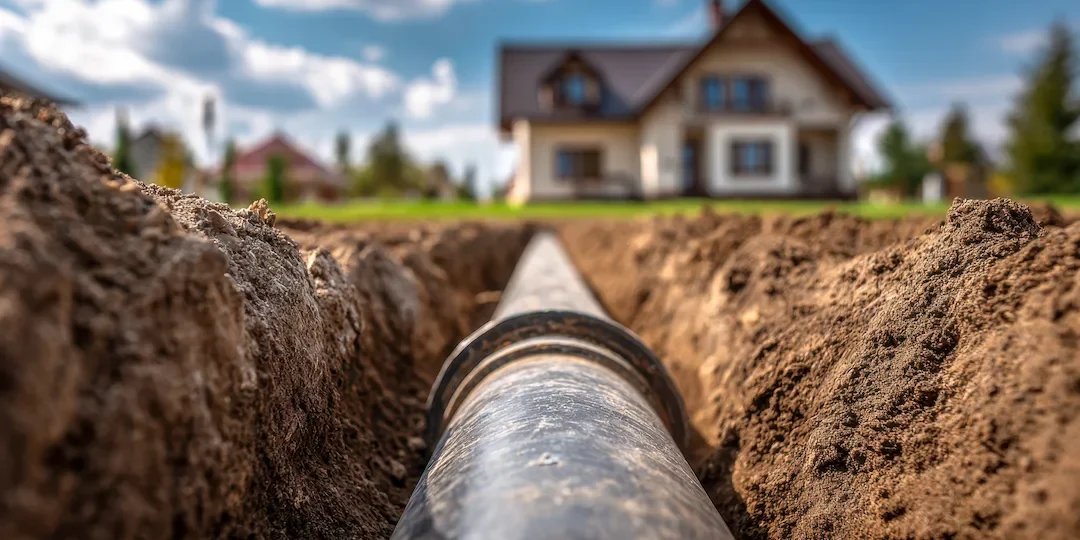
If your plumber recently used the words “excavation” and “sewer line” in the same sentence, the reaction most Cleveland homeowners have is immediate: torn-up landscaping, weeks of disruption, and a bill that clears the home equity line. That mental image is understandable — and almost always worse than the reality of how a professional, properly diagnosed excavation actually goes.
At A-Z Plumbing & Drain Service, we’ve been handling excavation jobs across greater Cleveland since 2006. In that time, we’ve learned that the homeowners who feel calmest about the process are the ones who understood what was coming before we arrived with equipment. This article covers exactly that: when excavation is necessary, how we confirm it before recommending it, and what the process looks like from the first camera pass to final backfill.
Why Underground Plumbing Problems Are More Common Than You’d Expect
Greater Cleveland’s housing stock is old. Neighborhoods like Lakewood, Cleveland Heights, Garfield Heights, and Rocky River are filled with homes built in the 1940s through the 1970s — many with original clay or cast-iron sewer lines still in the ground. Those materials weren’t designed to last indefinitely, and after 50 to 80 years of freeze-thaw cycles, soil shifting, and tree root pressure, they often don’t hold up.
This matters because when a sewer line fails, it rarely announces itself cleanly. You might notice:
- Multiple fixtures backing up simultaneously — a toilet, a tub, and a basement floor drain all sluggish at the same time
- A persistent sewage odor inside the home or near the foundation that you can’t trace to a source
- Soft or sunken spots in the yard, particularly along the path where your sewer line runs toward the street
- Unusually green or fast-growing grass over that same path — a sign of slow underground leakage fertilizing the soil above it
- Recurring clogs that keep returning a few weeks after drain cleaning
Any one of these symptoms deserves attention. Two or more happening at the same time warrants a camera inspection as soon as possible.
The Diagnosis Comes First — Every Time
Here’s the part of this process that matters most, and the part that separates a trustworthy plumbing company from a reckless one: we don’t recommend excavation until we’ve seen inside the pipe.
A-Z Plumbing uses video camera inspection technology to run a camera through your drain or sewer line in real time. The camera travels the length of the pipe and transmits live footage to a monitor — showing us exactly what’s happening inside: cracks, root intrusion, collapsed sections, offset joints, heavy buildup, or general deterioration.
For $89, this inspection gives us — and you — a clear, documented picture of what’s happening underground before a single piece of ground is disturbed. It tells us:
- Whether excavation is actually necessary, or whether a different repair method would work
- The precise location of the problem, so we dig only where needed — not across your entire yard
- The depth we’ll be working at and what’s in the surrounding area
- Whether high-velocity water jetting could clear the issue without any digging at all
If a plumber quotes you excavation without first performing a camera inspection, that’s a question worth asking directly. Digging without a diagnosis is guesswork. Guesswork in your yard is expensive and avoidable.
When Excavation Is the Right Call
Camera inspection sometimes reveals that a less invasive fix will solve the problem. When it doesn’t, the footage will show you exactly why excavation is necessary. The most common situations:
Collapsed or severely cracked pipe. When a section of pipe has caved in on itself or fractured along a significant run, no jetting or internal lining will restore flow. The damaged section has to come out and be replaced.
Structural root damage. Tree roots find microscopic cracks in aging pipes and widen them over years. When root intrusion has caused joint failure or pipe deformation — not just a blockage — excavation and replacement is the only durable solution.
Offset or separated joints. Cleveland’s soil shifts. Freeze-thaw cycles, heavy rainfall, and gradual settling cause pipe sections to move out of alignment. An offset joint creates a partial obstruction and an ongoing leak that can’t be corrected from the inside.
Deep leaks causing property damage. When a significant underground leak is producing yard sinkholes, foundation moisture, or persistently saturated soil, the source has to be accessed directly.
In each case, the camera footage creates a documented record of the problem — one you can see yourself. There’s no “trust us.” Just evidence.
What Plumbing Excavation Actually Looks Like, Step by Step
This is where most of the anxiety lives, so let’s go through it directly.
Step 1: Locate and Mark
Before any equipment moves, we use the camera footage and line-locating equipment to pinpoint the exact location and depth of the problem. The dig zone is marked precisely. We’re not opening a 40-foot trench to find a 4-foot failure — we access the pipe where the damage is and nowhere else.
We also communicate with you about what’s nearby: utility lines, landscaping, walkways, and any surface features that require extra care during the dig.
Step 2: Excavate
Our crew opens a clean access trench to the depth of the damaged pipe section. The excavation is methodical — removed soil is staged correctly so it can be used for backfill, and we work around existing structures, utility lines, and landscape features carefully. This isn’t a demolition job. It’s a targeted repair.
Step 3: Repair or Replace
Once we have clear access to the damaged section, we remove what needs to come out and replace it with modern, durable pipe material built for long-term performance. Before the trench closes, we inspect the completed repair — because once the ground is back in place, it stays that way.
Step 4: Backfill and Restore
The trench is backfilled in layers and properly compacted to prevent future settling. The surface is graded and left as clean as conditions allow. We’ll tell you upfront and honestly what the site will look like after completion, and what — if any — follow-up landscaping steps you may want to take.
How Long Does Plumbing Excavation Take?
Most standard residential sewer line excavation and repair jobs — the kind we handle regularly in Parma, Strongsville, Westlake, Solon, Berea, and across Northeast Ohio — are completed in one to two days. More complex jobs involving longer pipe runs, deeper access requirements, or difficult site conditions may take longer.
Before we start, you’ll have a realistic timeline — not an optimistic guess.
What Happens to My Yard?
It’s the most common question we hear, and it’s a fair one.
A targeted excavation, based on a proper camera diagnosis, is a fraction of the disruption homeowners imagine going in. When we know exactly where the problem is, the trench is sized accordingly. Precision diagnosis means precision digging — and less surface area affected.
After backfill and grading, most sites look better than homeowners expected. We walk every customer through realistic expectations for their specific site before work begins, including what surface restoration might involve. [CLIENT TO CONFIRM: Does A-Z handle surface or landscaping restoration directly, coordinate with a preferred vendor, or leave follow-up landscaping to the homeowner? This section should reflect actual policy.]
Serving Parma, Strongsville, Lakewood, Westlake, Solon, and Greater Cleveland
A-Z Plumbing & Drain Service has served Northeast Ohio homeowners since 2006. Our service area spans a wide stretch of the Cleveland metro — including Parma, Strongsville, Lakewood, Westlake, Solon, Berea, Rocky River, Garfield Heights, Avon, Avon Lake, Brunswick, Hudson, and dozens of surrounding communities.
When you call us for an excavation job, you’re not getting a crew that’s unfamiliar with the area. We know Northeast Ohio’s soil conditions, its aging housing stock, and what Cleveland winters do to underground infrastructure — and we factor all of it into how we plan and execute the work.
Start with $89 — Not a Backhoe
If you’re dealing with recurring drain problems, multiple slow fixtures, a soft or sunken spot in your yard, or a sewage smell you can’t trace — the first step isn’t a worst-case estimate. It’s a $89 drain camera inspection that shows you exactly what’s underground.
From there, you’ll get a straight answer about what’s needed: sometimes a drain cleaning resolves it, sometimes water jetting does, and sometimes excavation is the right call. Whatever the answer is, you’ll know the reason before any work begins.
Call A-Z Plumbing & Drain Service at (216) 320-4000 or visit callyourplumber.com to schedule your $89 drain camera inspection. We serve Parma, Strongsville, Lakewood, Westlake, Solon, and communities throughout greater Cleveland — and we’ve been giving homeowners straight answers since 2006.